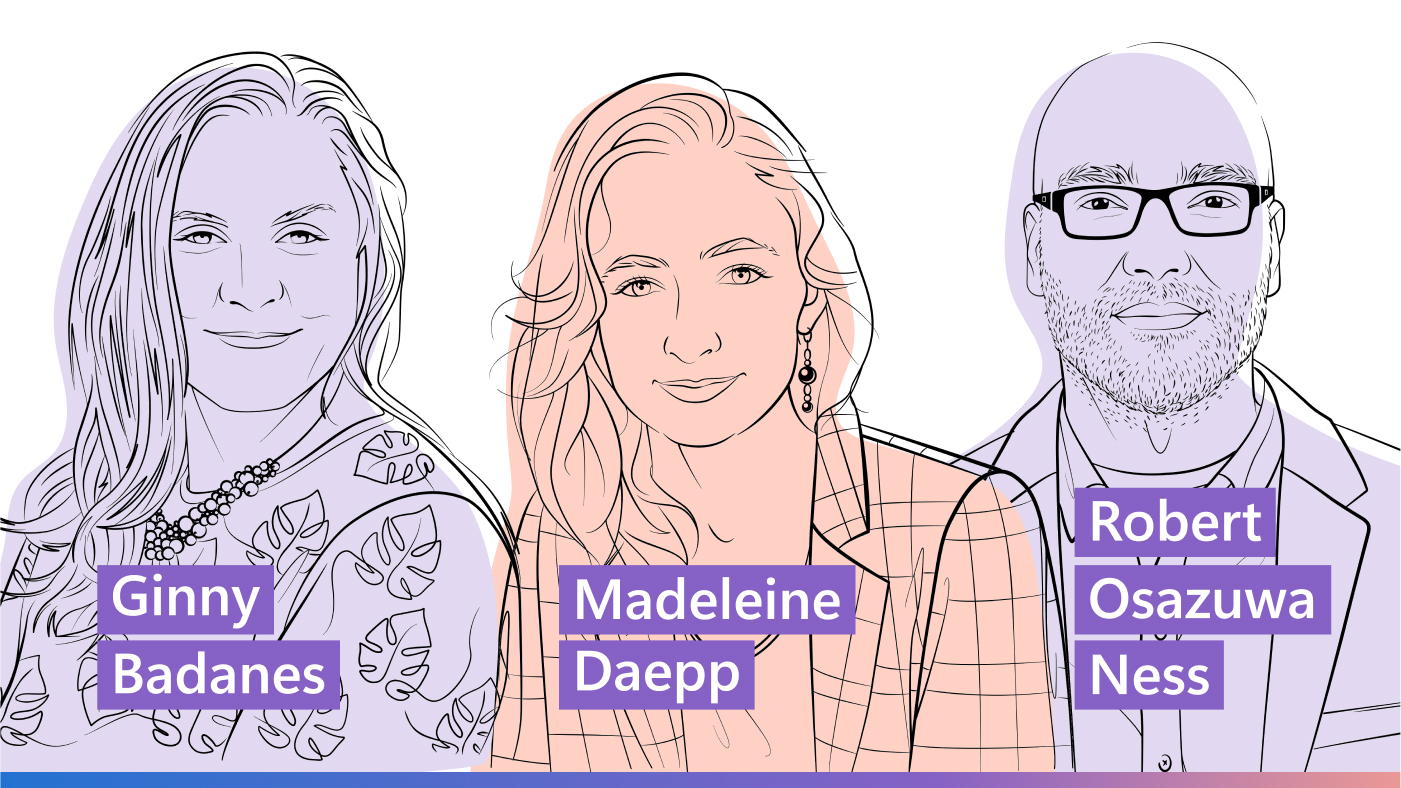
MADELEINE DAEPP

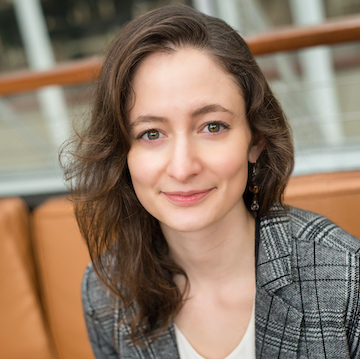
Madeleine I. G. Daepp, headshot

Dr. Madeleine I. G. Daepp is the Research Director at CDT, where she studies the challenges and opportunities novel technologies present for global democracies. A civic technologist by training, Madeleine is committed to ensuring AI and other emerging technologies solve more problems than they create.

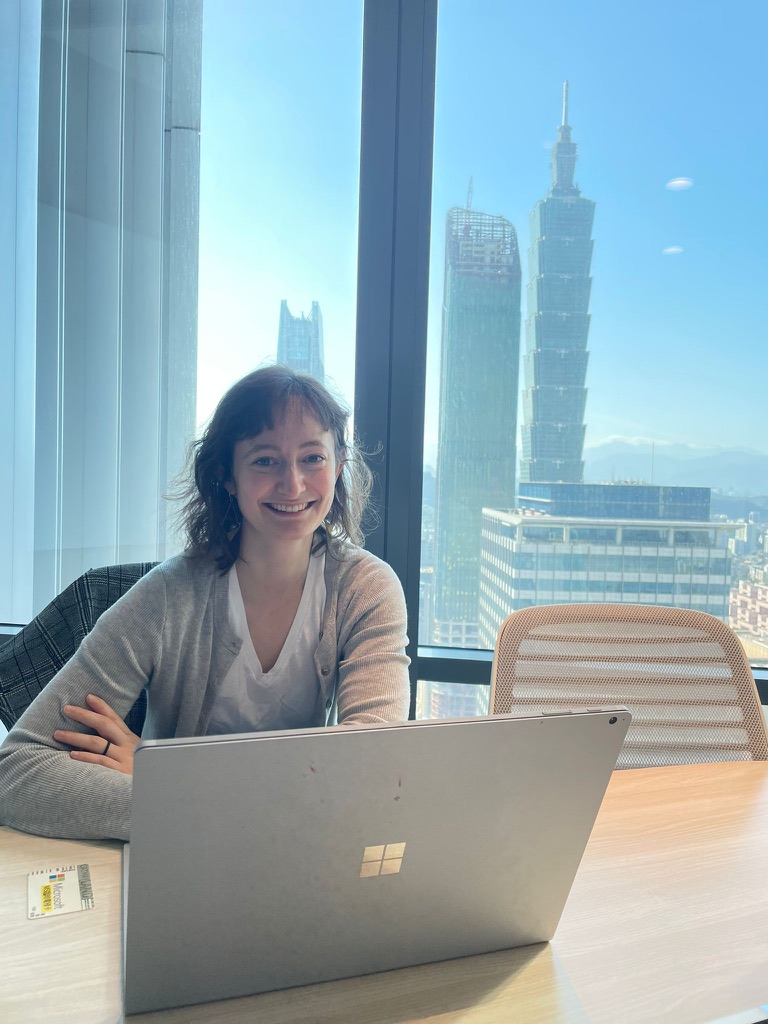
Madeleine smiling at her laptop with Taipei 101 visible through the window
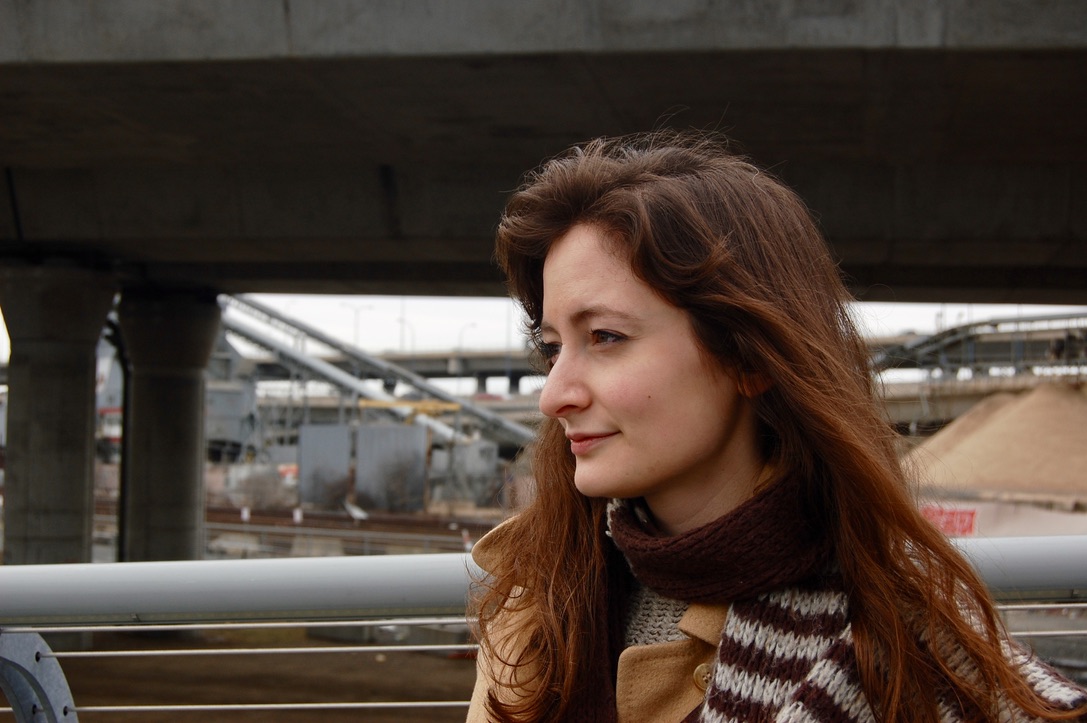
Profile portrait of Madeleine in front of concrete overpasses
Madeleine on a curving bridge at sunset, holding a Microsoft Research coffee cup

About.

Civic technologist.
AI & democracy.

PhD, Urban + Regional Planning
Massachusetts Institute of Technology · 2016–2020
MSc, Integrated Studies in Land and Food Systems
University of British Columbia · 2014–2016
BA, Economics and Mathematics
Washington University in St. Louis · 2009–2013
↓ Full CV below

I’m Research Director at the Center for Democracy & Technology, a think tank that defends civil rights and liberties in the digital age. I’m currently on civic leave from Microsoft Research, where my work spans interviews with frontlines democracy defenders in Taiwan and India to understand how generative AI reshaped global elections to studies of Copilot logs to understand the emerging AI divide in adoption.

I’m a civic technologist by training — I did my Ph.D. in urban planning, a discipline that is about how people solve problems in shared public spaces. The shared spaces I study these days tend to be online, but earlier projects were in physical space. I was research lead on Project Eclipse, a 100+ sensor hyperlocal air-quality deployment in Chicago. Our data anchored a three-newsroom reporting series by MuckRock, WBEZ Chicago, and the Chicago Sun-Times, and I taught the work as a case study at the World Bank/USC Annenberg Summer Institute. I’ve also worked with Boston residents to map displacement patterns using consumer credit data, and I collaborated with public health nutritionists to quantify food advertising environments around Vancouver schools. Core to my work is centering the people most affected by a problem in devising its solutions.

Speaking.

I speak about generative AI on democracy’s frontlines — what miscreants are up to, how civil society is pushing back, and how tech and government leaders should respond. For speaking and media inquiries, .

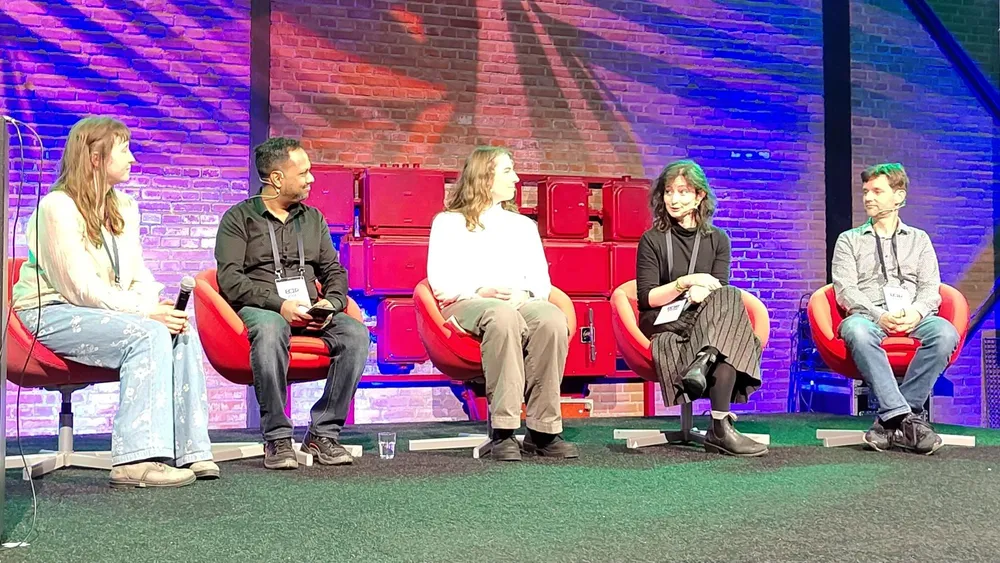
Madeleine on stage at ECIR 2026, sitting on a red chair with four other panelists
ECIR 2026 · IR4Good Panel, Delft
  1. Jul 16, 2026

    Lecture · SICSS-UW 2026

    University of Washington · Summer Institute in Computational Social Science

    Upcoming
  2. May 18, 2026

    Lightning talk · Community-Centered AI

    Cornell · Thought Summits

    Lightning
  3. Apr 16, 2026

    Guest lecture · Transformative Texts (SCLA 102)

    Purdue University

    Lecture
  4. Apr 14, 2026

    Guest lecture · 94-844 Generative AI Lab

    Carnegie Mellon University · Heinz College

    Lecture
  5. Mar 31, 2026

    Keynote: Gemini Hegemony ▸ Slides ↗ ▸ PDF ↗

    ECIR 2026 · European Conf. on Information Retrieval

    Keynote
  6. Mar 30, 2026

    IR4Good Panel

    ECIR 2026

    Panel
  7. Dec 11, 2025

    Responsible AI: Horizon-Scanning Workshop III

    Stimson Center

    Lecture

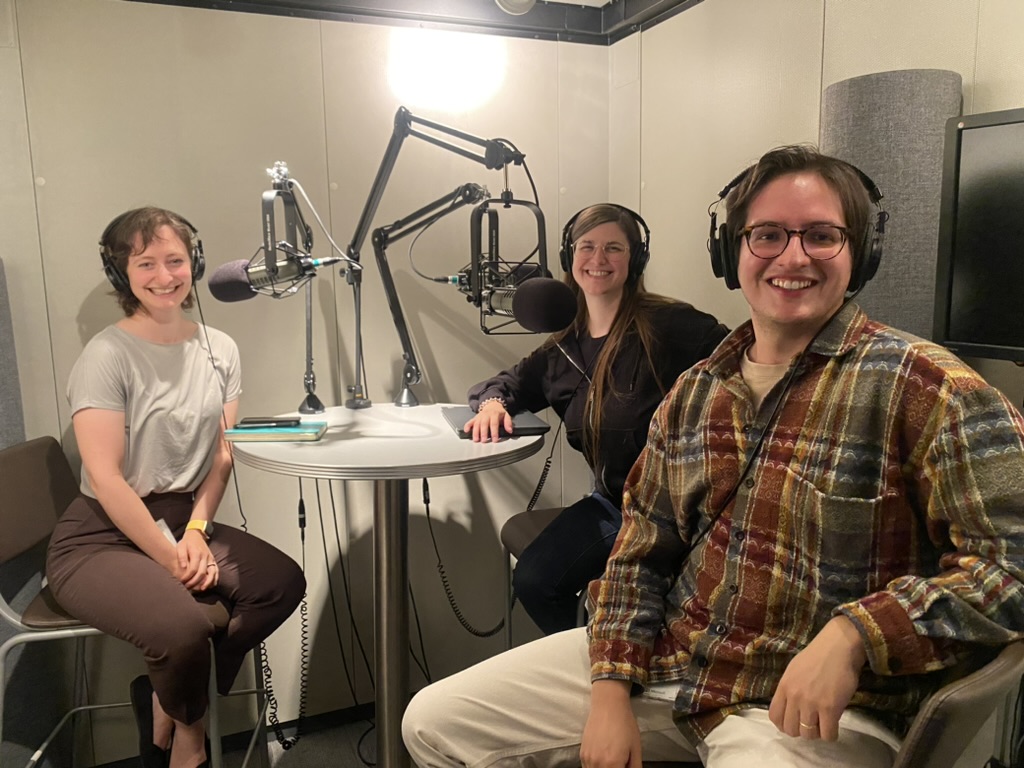
Podcasts.

Videos.

► Microsoft · Resilience, Ep. 4

Climate action through innovation

Featured interview on Project Eclipse — how 100+ low-cost sensors mapped air pollution across Chicago and what civic-tech partnerships make that kind of work possible.
Mentoring.

One of the best parts of my job.

I’ve been fortunate to work with wonderful interns and field researchers. Here are some of the PhD interns, field researchers, and collaborators who have shaped the work with me.

PhD interns
  • Isaac Slaughter
  • Saloni Dash
  • Alejandro Cuevas Villalba
  • Eva Maxfield Brown
  • Jennifer Scurrell
  • Ayina Anyachebelu
  • Precious Esie
  • Ti-Chung Cheng
  • Anastasia Montgomery
Field researchers
  • Alex Cabral
  • Dibyendu Mishra
  • Bharat Kumar Nayak
  • Vickie Yu-Ping Wang
  • Aparna Kalra
  • Shaily Desai
★ Interested in working together?

If you are a Ph.D. student or postdoc, I am taking interns, externs, and fellows through CDT. View open roles & apply →

Curriculum vitae.

Appointments

May 2026 — present
Research Director, Center for Democracy & Technology · Washington, DC
Oct 2025 — May 2026
Visiting Director of Civic Innovation, Public Democracy America
2020 — present (on civic leave 2025–26)
Senior Researcher, Microsoft Research · Redmond / Cambridge
2021 — 2023
Affiliate Associate, Department of Economics, Harvard University · Cambridge, MA
2020
David E. Bell Postdoctoral Fellow, Harvard Center for Population and Development Studies / T.H. Chan School of Public Health · Cambridge, MA
2018 — 2020
Researcher, Harvard T.H. Chan School of Public Health · Cambridge, MA
2017 — 2020
Research Fellow, Federal Reserve Bank of Boston · Boston, MA
Spring 2017
Clinical Student, Harvard Food Law and Policy Clinic · Cambridge, MA
2013 — 2014
AmeriCorps VISTA, United Way of Southeastern Connecticut

Education

2016 — 2020
PhD, Urban + Regional Planning, Massachusetts Institute of Technology
2014 — 2016
MSc, Integrated Studies in Land and Food Systems, University of British Columbia
2009 — 2013
BA, Economics and Mathematics, Washington University in St. Louis · summa cum laude

Grants & awards

2020
Governance Fellow · Harry S. Truman Foundation (U.S. Federal Government)
2019
Bill Mitchell++ Fund Award · MIT
2019
Harold Horowitz (1951) Research Fund Award · MIT
2016
NSF Graduate Research Fellowship · U.S. National Science Foundation
2016
Presidential Fellowship · MIT
2016
Vanier Canada Graduate Fellowship (Declined) · Government of Canada
2015
Li Tze Fong Fellowship · University of British Columbia
2015
EPIC Scholarship · Columbia University
2013
Olin Prize for Excellence in Economics · Washington University in St. Louis
2013
Class Marshall · Washington University in St. Louis
2013
Finalist · Rhodes & Marshall Scholarships
2012
Truman Scholarship · Harry S. Truman Foundation
2012
Udall Scholarship · Udall Foundation
2009
Arnold J. Lien Full-Tuition Scholarship · Washington University in St. Louis

Publications

2026
Daepp MIG, Tomlinson K, Counts S, Suri S. AI and the democratization of knowledge work. · Nature Computational Science
2026
Daepp MIG, Slaughter I. How Early Adopters Used Generative AI Worldwide: Variation by Country Income and Language. · arXiv preprint
2025
Cuevas A, Dash S, Nayak BK, Vann D, Daepp MIG. Anecdoctoring: Automated red-teaming across language and place. · EMNLP
2025
Daepp MIG, Cuevas A, Ness RO, Wang VYP, Nayak BK, Mishra D. Generative Propaganda. · arXiv preprint
2025
Daepp MIG, Counts S. The emerging generative AI divide in the United States. · ICWSM
2025
Cuevas Villalba A, Brown EM, Scurrell JV, Entenmann J, Daepp MIG. Collecting Qualitative Data at Scale with Large Language Models: A Case Study. · CSCW
2025
Sportiche N, Blanco H, Daepp MIG, Graves E, Cutler D. Can Fair Share Policies Expand Neighborhood Choice? Evidence from Bypassing Exclusionary Zoning under Massachusetts Chapter 40B. · Housing Policy Debate
2024
Daepp MIG, Ness RO. Video will kill the truth if monitoring doesn’t improve, argue two researchers. · The Economist (By Invitation)
2023
Daepp MIG*, Cabral A*, Werner TM, Mansour R, Catlett C, Roseway A. The “three-legged stool”: Designing for equitable city, community, and research partnerships in urban environmental sensing. · CHI 2023 · *joint first authorship
2023
Daepp MIG, bunten dm, Hsu JW. The Effect of Racial Composition on Neighborhood Housing Prices: Evidence from Hurricane Katrina-Induced Migration. · Journal of Urban Economics
2023
Anyachebelu A, Cabral A, Abdin MI, Choudhury P, Daepp MIG. Characterizing the effects of structural fires on fine particulate matter with a dense sensing network. · Scientific Reports
2023
Montgomery A, Daepp MIG, Abdin MI, Choudhury P, Malvar S, Counts S. Intraurban NO2 hotspot detection across multiple air quality products. · Environmental Research Letters
2022
Daepp MIG, Cabral A, Iyer V, Counts S, Johns P, Roseway A, Catlett C. Eclipse: An End-to-End Platform for Low-Cost, Hyperlocal Environmental Sensing in Cities. · ACM/IEEE IPSN, Milan, Italy
2022
Daepp MIG, Binet A, Gavin V, Arcaya MC. The Moving Mapper: Participatory action research with big data. · Journal of the American Planning Association
2022
Esie P, Daepp MIG, Roseway A, Counts S. Neighborhood Composition and Air Pollution in Chicago: Monitoring Inequities with a Dense, Low-Cost Sensing Network, 2021. · American Journal of Public Health 112(12): 1765–1773
2022
Daepp MIG. Small-area moving ratios and the spatial connectivity of neighborhoods: Insights from consumer credit data. · Environment and Planning B: Urban Analytics and City Science
2020
Daepp MIG, Graves EM, Arcaya MC. Gateways to Opportunity? Neighborhood Trajectories of Massachusetts Residents. · Federal Reserve Bank of Boston
2019
Daepp MIG, Gortmaker SL, Wang YC, Long MW, Kenney EL. WIC food package changes: trends in childhood obesity prevalence. · Pediatrics
2019
Velazquez CE, Daepp MIG, Black JL. Assessing exposure to food and beverage advertisements surrounding schools in Vancouver, BC. · Health & Place
2017
Daepp MIG, Black J. Assessing the validity of commercial and municipal food environment data sets in Vancouver, Canada. · Public Health Nutrition
2017
Daepp MIG, Arcaya MC. The effect of health on socioeconomic status: using instrumental variables to revisit a successful randomized controlled trial. · Economics & Human Biology
2017
Lebel A, Daepp MIG, Block JP, Walker R, Lalonde B, Kestens Y. Quantifying the foodscape: a systematic review and meta-analysis of the validity of commercially available business data. · PLoS One
2015
Daepp MIG, Hamilton MJ, Bettencourt L, West G. The mortality of companies. · Journal of the Royal Society Interface
2015
Flynt A, Daepp MIG. Diet-related chronic disease in the northeastern United States: a model-based clustering approach. · International Journal of Health Geographics
2015
Daepp MIG. Prices and Availability of Healthy Foods Across St. Louis. · The American Economist

Teaching

Apr 2026
Guest lecture · 94-844 Generative AI Lab (CMU Heinz, M.Beibei Li & Sara Kingsley)
Apr 2026
Guest lecture · Transformative Texts (Purdue SCLA 102, Eddie Yang)
Spring & Fall 2018
Teaching Assistant · Quantitative Reasoning, MIT — led R programming tutorial for graduate statistics class
Spring 2017
Co-lead · Epidemiology for Urban Planners, MIT — developed syllabus for graduate reading group on planning and public health
2014 — 2016
Teaching Assistant · Land, Food & Community 1, UBC
2011 & 2012
Teaching Assistant · Current Macroeconomic Issues, Washington University
Off-hours

Mostly riding around
in places like this.

Lake Geneva, CH
Touring × 2024